
Aviation Crisis: Trump Threatens to Ban Canadian Jets
NEWSPOLICY
Bernardo Prantz Pin
1/30/20264 min read
The Threat of Decertification
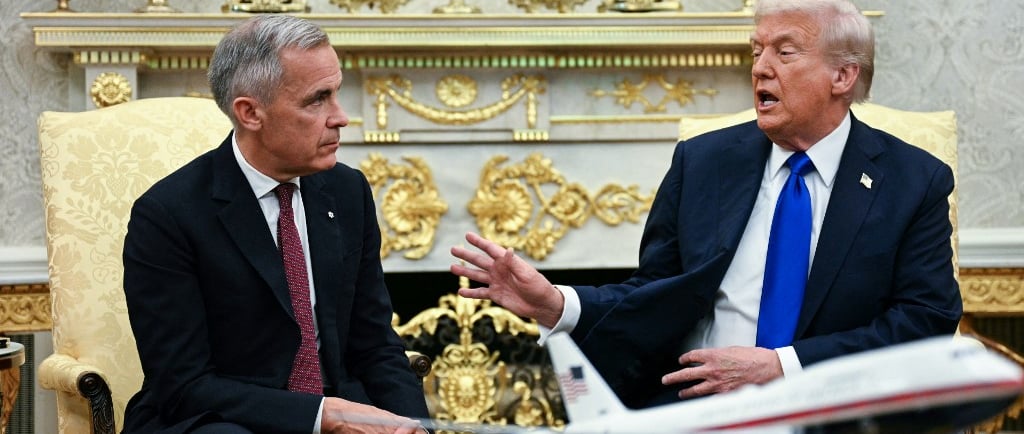
In recent developments regarding the aviation industry, former President Donald Trump has issued a stark warning to the Canadian government, hinting at the potential decertification of Canadian-made jets. This ultimatum highlights specific demands that Trump has positioned as crucial for maintaining operational status within U.S. airspace. Should these demands remain unaddressed, the ramifications for Canadian manufacturers and U.S.-Canada relations could be significant.
Trump's assertions have primarily focused on two major concerns: national security and competitive fairness. He contends that certain Canadian-made aircraft do not meet the stringent requirements set forth by U.S. aviation regulations. The potential decertification could lead to a ban on these aircraft entering or operating in U.S. airspace, which would affect various airlines that utilize Canadian jets, including those of Bombardier and other manufacturers.
Legally, the decertification process is not straightforward. It would necessitate a comprehensive review by the Federal Aviation Administration (FAA), which oversees airworthiness regulations. Any such decision could evoke a strong response from Canada, prompting diplomatic negotiations aimed at resolving the issue before it escalates into a trade dispute. Historically, aviation decertification has not only economic implications but also influences public perception and bilateral trade agreements.
The timeline leading to Trump's ultimatum has unfolded against the backdrop of ongoing tensions between the United States and Canada over various trade issues. As negotiations continue, stakeholders in both nations are watching closely, as any firm decision regarding the status of Canadian jets will reverberate through the aviation sector and beyond.
The Competitive Landscape between Bombardier and Gulfstream
The ongoing rivalry between Bombardier and Gulfstream underscores significant aspects of the aerospace industry, particularly in light of recent tensions stemming from trade policies advocated by the Trump administration. Bombardier, a Canadian multinational aerospace manufacturer, specializes in the production of business jets, commercial aircraft, and rail vehicles, while Gulfstream, a subsidiary of General Dynamics, is renowned for its high-end business jets. The preference indicated by Trump for Gulfstream raises questions about government favoritism and its impact on the industrial landscape.
Trump’s public statements regarding Bombardier, suggesting that a ban on their jets is a viable option, reflects a broader narrative favoring U.S. manufacturing interests. This preference may be indicative of an effort to bolster the American aerospace sector, which could have substantial implications for cross-border trade with Canada. The aerospace industry, characterized by its complex supply chains, relies heavily on international cooperation, with components and technologies often sourced from various countries. Mindful of this interconnectedness, such overt political actions could disrupt long-standing business arrangements and ultimately affect consumers and businesses alike.
Moreover, this tension between the two companies could reshape competitive strategies within the aerospace market. Bombardier faces significant challenges in reinforcing its market share amid political and economic pressures. Its ability to navigate these challenges will depend not only on external market conditions but also on how the Canadian government and the aerospace community respond to the potential threat posed by U.S. trade policies favoring companies like Gulfstream. In this competitive environment, the future success of Bombardier and its place within the larger context of North American aerospace manufacturing remains uncertain, highlighting the intricate balance between political influence and market dynamics.
The Fallout: Diplomatic and Travel Chaos
The recent threat by President Trump to ban Canadian jets has triggered a complex wave of potential consequences spanning diplomatic relations, business travel, and the aerospace industry. This escalation in tensions could significantly impact the strong collaborative ties between the United States and Canada, leading to diplomatic fallout that may extend beyond the aviation sector. Historically, both nations have maintained a cooperative relationship, but such unilateral threats introduce uncertainty and risk to bilateral agreements.
On the surface, the immediate reaction to a ban on Canadian jets would likely manifest as an array of disruptions in business travel. Companies and executives who rely on efficient air travel for cross-border operations may find themselves grappling with logistical challenges and increased costs. Airlines that utilize Canadian jets, which aid in connecting major cities with direct flights, will face operational hurdles, potentially leading to reduced services and flight cancellations. This, in turn, would frustrate travelers and provoke concerns among multinational corporations reliant on seamless connectivity.
In a broader context, these tensions could jeopardize the integrity of the US-Mexico-Canada Agreement (USMCA). As trade partners, the three nations depend on an atmosphere of stability and cooperation; any disruption in aviation is likely to reverberate throughout various sectors, affecting import-export dynamics and supply chains. Furthermore, the aerospace industry, a significant player in international trade, could suffer as market confidence dips, leading to a decline in investments and collaborative projects with Canadian partners.
Ultimately, the threat goes beyond aviation and could symbolize a shift in international relations, setting a precedent that may influence how countries navigate political disagreements in multiple sectors. The long-term implications for diplomacy and business interconnectivity are yet to be fully understood, but they herald an uncertain future for cross-border air travel and economic collaboration.
Desperation and Negotiation Tactics
In the landscape of international trade, the threat to ban Canadian jets exemplifies drastic measures that may be employed as negotiation tactics. Such tactics are often rooted in desperation, indicating that when stakes are high, governments may resort to extreme actions to assert their position. The crux of the matter lies in the broader implications of these tactics within the framework of trade relations and international diplomacy.
The 'America First' approach heralded by the U.S. administration suggests a retraction from multilayered trade agreements and a move towards unilateral actions. This rhetoric not only has significant ramifications for the aerospace sector but also alters the dynamics of international cooperation. By utilizing the banning of Canadian jets as a potential instrument in negotiations, the United States positions itself in a confrontational stance, complicating relationships with allies that are crucial for maintaining economic stability and collaborative advancement in aerospace innovations.
This situation invites scrutiny into how trade disputes can escalate beyond mere economic disagreement into destabilizing geopolitical conflicts. The aviation crisis has implications that stretch far beyond the surface issues of aircraft manufacturing and sales. It challenges the notions of globalization and interdependence in an era where collaboration has underpinned technological progress across nations. Using bans on aviation as a negotiating tool places not just the immediate stakeholders in jeopardy but poses risks to job creation, technological investments, and the very fabric of international trust.
Ultimately, employing such drastic measures as negotiation tactics in trade disputes illustrates a shift towards a more combative and less collaborative international environment. This crisis reflects a nuanced chess game on the geopolitical stage, where far-reaching consequences are at stake, potentially altering the global aerospace landscape for years to come.