
Market Holds Breath: Trump to Name New Fed Chair Today
NEWSECONOMYPOLICY
Bernardo Prantz Pin
1/30/20264 min read
The Announcement: What We Know So Far
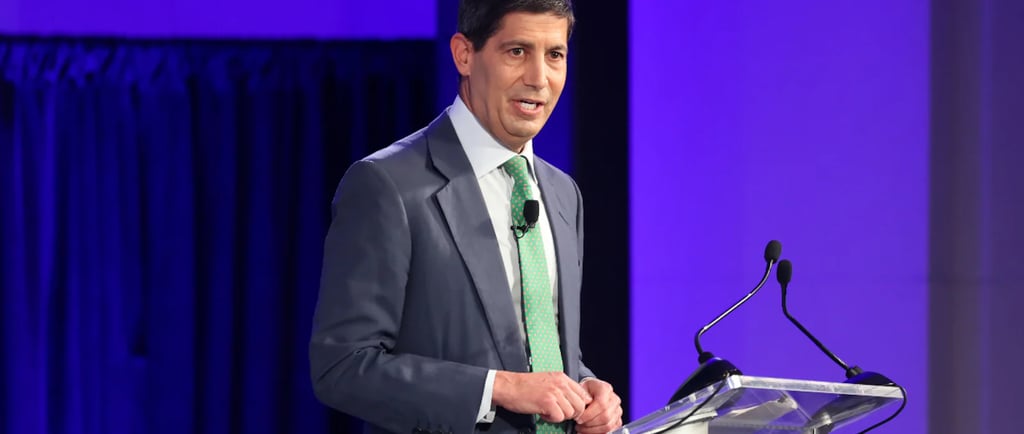
Today marks a pivotal moment in the economic landscape of 2026, as President Trump is set to announce his choice for the next Federal Reserve Chair. This announcement is not merely a formality; it carries considerable implications for monetary policy, economic stability, and the broader financial system. The Federal Reserve, often regarded as the keeper of the nation’s monetary policy, influences interest rates, inflation, and overall economic growth. Thus, the individual chosen to lead it will play a crucial role in shaping the United States' economic trajectory.
The anticipation surrounding this decision has prompted discussions among economists and financial experts who are keenly assessing potential candidates. Among the names circulating in the media are current Fed members and economic advisors with robust backgrounds in monetary policy. Each candidate comes with distinct philosophies regarding economic management—some advocating for a more aggressive stance on interest rates, while others emphasize a measured, cautious approach aimed at fostering long-term growth.
This decision is particularly significant in the context of President Trump's broader economic policies, which have emphasized deregulation and tax incentives aimed at spurring economic activity. The new Fed Chair's alignment with these priorities will be closely scrutinized, as it may signal the administration's commitment to maintaining the independence of the Federal Reserve while simultaneously seeking to leverage its influence for political ends.
The implications of this announcement extend beyond mere staffing; it is a litmus test of President Trump’s economic strategies and how they align with the Federal Reserve's mission. As the market holds its breath, stakeholders await clues about the future direction of the economy, interest rates, and inflationary pressures that could shape economic discourse in the coming years.
Market Reaction: A Study in Nervousness
The announcement regarding the new Federal Reserve chair has elicited immediate and pronounced reactions across financial markets. In the bond market, yields have fluctuated significantly, reflecting investor uncertainty about the future direction of monetary policy. The appointment of a new Fed chair can signal a shift in the interest rate landscape, and this has led to an uptick in trading volumes as market participants reposition their portfolios in anticipation of potential changes.
Equities have likewise displayed volatility, with major indices experiencing sharp movements in response to the news. The worry among investors centers on the prospect of a 'politicized' Federal Reserve, where the selection of a chair may indicate a departure from the traditional independence of the institution. This fear manifests in the form of increased implied volatility, as measured by indices such as the VIX (Volatility Index), which has shown spikes in response to key economic announcements and signals from the administration.
Moreover, the potential for shifts in interest rate policy is fueling apprehension among investors. Often, a new Fed chair may bring changes in the approach to inflation control, employment targets, and overall economic stimulation strategies. The market is keenly aware that such changes could directly impact borrowing costs and, in effect, economic growth. As a result, various asset classes are being scrutinized under this new lens of uncertainty.
In summary, the market's immediate response to the announcement serves as a barometer of prevailing investor sentiment, characterized by a mix of hope and apprehension. The interplay between bond yields, equity volatility, and market sentiment highlights the critical role of the Federal Reserve in shaping economic expectations and underscores the tense atmosphere surrounding today's announcement.
The Potential Impact on Interest Rates and Inflation
The appointment of a new Federal Reserve Chair, particularly one aligned with the policies of the White House, may usher in significant changes regarding interest rates and inflation. Traditionally, the Federal Reserve plays a critical role in managing the economy by adjusting the federal funds rate, which influences borrowing costs for both consumers and businesses. A pro-administration Chair could indicate a more dovish monetary policy stance, focusing on promoting economic growth and potentially keeping interest rates lower for a more extended period.
If the new Chair opts for maintaining or even lowering interest rates, the immediate effect could be a decrease in mortgage rates. Lower mortgage rates often result in heightened consumer spending on homes, further stimulating the housing market. Additionally, these reduced rates can encourage businesses to invest in expansion, as financing becomes cheaper. Consequently, a robust consumer spending environment could emerge, leading to increased overall economic activity.
Conversely, if inflationary pressures are perceived as insufficient, the newly appointed Chair might adjust interest rates upwards to cool economic expansion and keep inflation in check. This adjustment could dampen consumer spending and slow down growth, as higher rates typically lead to increased mortgage payments and higher costs in borrowing, which can restrain overall economic performance.
The long-term implications of these interest rate adjustments are profound. An environment of persistently low rates might lead to higher inflation in the long run, challenging the Fed's mandate to ensure price stability. Conversely, sharp rate hikes could jeopardize economic recovery, leading to potential stagflation scenarios. Ultimately, the impact of the new Fed Chair's policies on interest rates and inflation will be closely monitored, as their decisions hold significant weight in determining the future economic landscape.
What It Means for Your Wallet: Navigating Uncertainty
The impending appointment of the new Federal Reserve Chair has significant implications for both consumers and businesses. As the central figure in determining monetary policy, the Fed Chair influences interest rates, which directly affects various financial products, including mortgages, personal loans, and credit lines. If the new Chair opts for a more hawkish stance—prioritizing inflation control—borrowers may face higher interest rates, leading to increased costs in loan repayments. On the other hand, a dovish approach could result in lower rates, creating favorable conditions for those seeking financing.
Homebuyers may experience immediate effects on mortgage rates, which could rise if markets anticipate a tightening of monetary policy. Higher mortgage rates can reduce home affordability, leading to potential declines in housing demand. Businesses, particularly those reliant on credit for expansion, could also feel the pinch if the new Chair’s policies lead to a contraction in credit availability.
To navigate this period of uncertainty, consumers should take proactive measures to safeguard their financial health. Evaluating current interest rates and comparing loan offers becomes paramount in this fluctuating environment. Additionally, maintaining a good credit score can enhance access to lower loan costs, thus providing a buffer against potential rate hikes. Moreover, consumers should consider locking in rates early, should they be planning to buy a home or finance a major purchase shortly after the announcement of the Fed Chair.
Ultimately, staying informed about the Fed’s policy direction and the evolving economic landscape will empower individuals and small businesses to make well-informed financial decisions. Adjusting one’s financial strategy in anticipation of interest rate shifts can prove crucial in mitigating risks and capitalizing on opportunities that arise from the newly appointed Fed Chair’s policies.