
Trump's Greenland Deal: A Geopolitical Thriller Unfolds at Davos 2026
POLICYECONOMYNEWS
Bernardo Prantz Pin
1/28/20264 min read
The Announcement: Trump’s Framework for Greenland
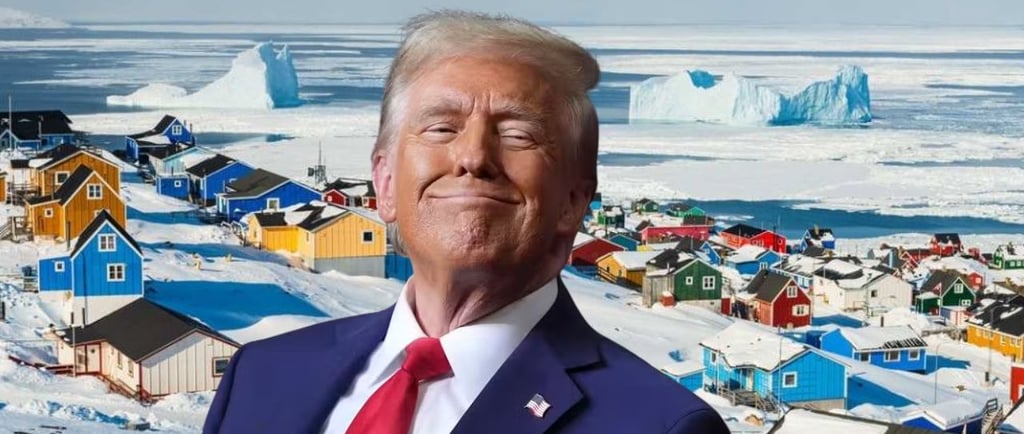
During a highly anticipated address at the World Economic Forum in Davos, President Donald Trump made waves with the unveiling of a groundbreaking framework deal that seeks to enhance U.S. presence and ownership rights in Greenland. This announcement comes amid rising geopolitical tensions, where strategic positions and territory have become increasingly significant amid global power shifts.
Trump portrayed this initiative as a pivotal move for national security, asserting that the acquisition of Greenland would allow for the establishment of enhanced military capabilities in the Arctic region. Central to this vision is the proposed deployment of a 'Golden Dome' missile defense system, intended to solidify U.S. defense posture not just in Greenland, but throughout the northern hemisphere. The implications of such a military installation could reshape alliances and create new dynamics, particularly concerning Arctic sovereignty and international relations.
The framework deal has already raised eyebrows among geopolitical analysts, who question the prospects for U.S.-Danish relations as well as the legal ramifications of ownership claims over Greenland, which is an autonomous territory of Denmark. Observers have highlighted the potential for conflict and negotiation failures, drawing parallels with other territorial disputes throughout history. Whether this strategy is viewed as a legitimate defense measure or a politically motivated land grab remains to be seen, but it undoubtedly positions the Arctic as a focal point for future strategic competition.
In light of the developments stemming from this announcement, the world is likely to witness a variety of responses from both allied and adversarial nations. The framework's reception could signal whether this approach will further encrypt relationships between the U.S. and Denmark, or if it might provoke a broader international dialogue regarding Arctic governance and military readiness.
A Shift in Strategy: Military Force Off the Table
In a dramatic pivot from earlier statements, President Trump has notably scaled back his rhetoric regarding the potential use of military force in relation to Greenland. This shift signifies a broader transformation in his administration's strategy concerning Arctic security. Traditionally characterized by a more confrontational approach, the latest statements now advocate for diplomatic engagement and alliance-building as primary methodologies to address increasing geopolitical tensions in the region.
The President has articulated the need for what he calls 'total access' to Greenland, framed as a crucial step for enhancing the security of Arctic territories. This encompasses not only access to physical locations but also fostering collaborative relationships that ensure the United States can effectively counter rising threats from nations such as Russia and China. Such an emphasis on accessibility aligns with broader security objectives, which include establishing a robust presence in the Arctic to safeguard American interests while maintaining oversight over areas of increasing strategic importance.
This new strategy is indicative of a pragmatic approach to foreign relations, focusing on building skilled partnerships with Arctic allies and reaffirming mutual interests rather than resorting to aggressive tactics. By favoring diplomatic channels, the Trump administration is demonstrating an understanding that Arctic security is best managed through cooperative efforts, which can simultaneously address pressing vulnerabilities without escalating tensions through military posturing.
Ultimately, President Trump's decision to remove militaristic options from the table will likely reshape how the United States positions itself in the Arctic. This approach provides a fresh perspective on maintaining territorial integrity and security in the face of global competition, affirming a commitment to working collectively to address shared challenges.
The Danish Response: A Clear Red Line
In response to former President Donald Trump's audacious proposal regarding the purchase of Greenland, Danish Prime Minister Mette Frederiksen swiftly issued a clear and categorical denial of any negotiations pertaining to such a sale. Her firm stance underscores the seriousness with which Denmark regards its sovereignty over Greenland, a territory that has been an integral part of the Kingdom of Denmark for centuries. In her remarks, Frederiksen emphasized that the idea of trading Greenland is not just a matter of transaction, but a sensitive issue reflecting deeper sentiments about the integrity of national sovereignty.
Frederiksen's assertion delineates a distinct 'red line' in the bilateral relations between Denmark and the United States. By labeling the proposal as a violation of Danish sovereignty, she is indicating that any attempts to negotiate the territory's status will be perceived as an affront to Denmark's international standing and self-determination. This strong response also highlights the ever-present tensions that can arise in geopolitical discussions, especially when a powerful nation like the United States makes unorthodox proposals regarding territory held by another country.
This development is not merely a diplomatic rebuff; it sets the stage for a potentially tumultuous interaction as both nations navigate the delicate balance between sovereignty and strategic interests. Greenland, possessing significant natural resources and a strategic location, makes it a focal point for global powers, further complicating the situation. As such, the Danish government's resolute position against the sale establishes a precedent that any future discussions about Greenland's status will require not only respect for its sovereignty but also a nuanced understanding of the geopolitical landscape in which it lies.
The Arctic's Strategic Importance in 2026
As we approach the year 2026, the Arctic is emerging as a focal point in global geopolitics, driven primarily by climate change and the ensuing competition for resources. The melting ice caps are not only reshaping the environment but also redefining traditional boundaries and access to vast treasures beneath the Arctic seabed. Nations are increasingly recognizing the importance of the Arctic, with its untapped reserves of natural resources, including oil, gas, and minerals, as well as new shipping routes that could transform global trade.
Trump's initiative regarding Greenland must be seen within this context of escalating strategic maneuvering. Control over territory and maritime routes in the Arctic is becoming a critical objective for major powers, particularly the United States, Russia, and China. The U.S. seeks to solidify its presence and maintain a balance of power in the region amidst growing Russian assertions and Chinese ambitions. For instance, Russia has been proactively asserting its Arctic claims by expanding military bases and capabilities, while China is positioning itself as a "near-Arctic" state, actively involved in trade routes and scientific research.
The stakes are high, as the Arctic could become a battleground for influence where military readiness, political alliances, and economic interests intertwine. Establishing military bases or strategic partnerships in Greenland could enhance the U.S. capacity to monitor and respond to threats posed by rival nations. Moreover, as the competition intensifies, the potential for disputes over territorial claims and resource allocation may escalate, necessitating diplomatic negotiations and conflict resolution mechanisms.
Hence, Trump's Greenland deal, while seeming like a singular ambition, must be understood as part of a broader geopolitical narrative where the Arctic's strategic importance is paramount. The developments occurring in this region will not only reshape national policy but also impact international relationships on a global scale.