
Tensions Rise in the Strait of Hormuz: A Defense Situation Report
POLICYNEWS
Bernardo Prantz Pin
1/27/20265 min read
The Current Crisis in the Strait of Hormuz
The Strait of Hormuz, a critical waterway for global oil transportation, has become the focal point of escalating tensions as of January 26, 2026. Recent activities in this region have raised concerns about potential conflict, particularly with the movement of military assets that reflect a growing sense of urgency among international actors.
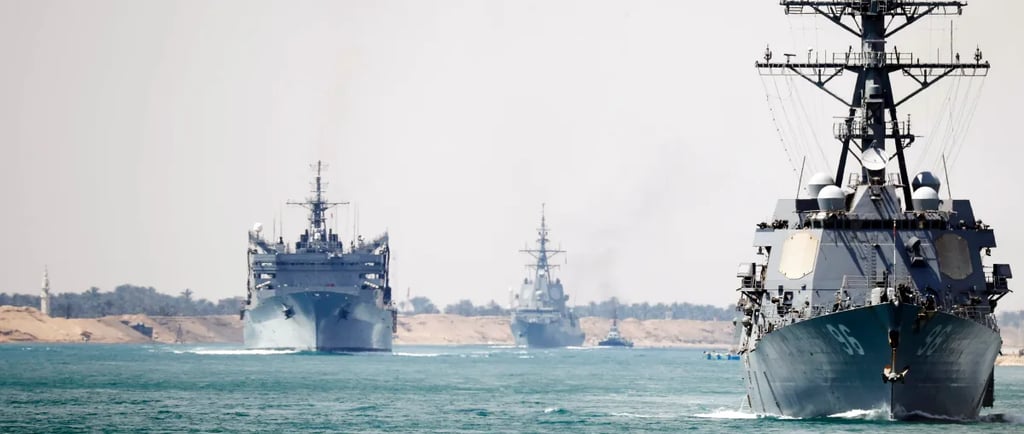
One of the most significant developments in recent weeks has been the repositioning of a US Navy carrier group into an offensive formation in the Strait. This maneuver is viewed not merely as a show of military strength but also as a strategic response to perceived threats from Iran. The deployment underscores the United States' commitment to maintaining freedom of navigation and ensuring the security of maritime routes vital to the global economy.
The presence of US naval forces in an aggressive posture points to a heightened risk of confrontation in a region already fraught with historical tensions. Analysts suggest that these military movements are a reflection of evolving geopolitics, where the stakes have only grown higher. The confrontation between US forces and Iranian military assets could have far-reaching consequences, not only for regional stability but also for international trade, given that around a fifth of the world's oil passes through the Strait.
In response to these developments, Iran has also ramped up its military preparedness in the region, indicating a willingness to defend its interests aggressively. This tit-for-tat escalation is contributing to a precarious environment, where miscalculations could lead to unintended military engagements. The situation demands careful monitoring, as the interplay between military readiness and diplomatic efforts plays a crucial role in either diffusing or exacerbating the current crisis.
Iran's Reaction and Threats of Consequences
In the wake of recent U.S. military maneuvers in the Strait of Hormuz, Iran has issued stern warnings characterizing any escalation as detrimental. Iranian officials have been unequivocal in their rhetoric, emphasizing that such actions could lead to "terrible consequences." This language serves not only as a direct response to the U.S. but also plays a crucial role in Iran's broader military and political strategy in the region.
Historically, the Strait of Hormuz has been a flashpoint between Iran and the United States, exemplary of the long-standing tensions that have characterized U.S.-Iran relations. The strait is a vital artery for global oil shipments, making it a strategic priority for Tehran. In light of U.S. naval deployments aimed at ensuring freedom of navigation, Iran perceives these actions as not only provocative but also a challenge to its sovereignty.
Iran's military posture has often included both conventional and asymmetrical approaches. The Iranian military has signaled its readiness to retaliate if pushed, which may include the mobilization of naval forces or the use of proxy groups in the Gulf region. This multifaceted approach allows Iran to project power while maintaining plausible deniability in the event of conflict. Furthermore, Iran's rhetoric frequently invokes national sovereignty and regional autonomy, framing its defensive posture as legitimate and necessary in the face of foreign aggression.
The U.S. presence in the region, particularly via aircraft carriers and submarine deployments, is perceived by Iran as an ongoing threat. This dynamic heightens the risk of miscalculations, which could lead to conflict. Iran's response is thus not merely a matter of military posturing, but also reflects deep-seated grievances stemming from decades of U.S. foreign policy in the Middle East, including economic sanctions and interventions. Such historical context is crucial in understanding the current escalation and Iran's assurances of dire repercussions should U.S. actions continue unabated.
The Economic Implications: Oil Price Spike
The recent tensions in the Strait of Hormuz have elicited significant concerns regarding the stability of global oil markets. Notably, an alarming 4% spike in oil prices was recorded on January 26, a reaction that reflects the market's sensitivity to geopolitical uncertainties. The Strait of Hormuz is vital, serving as a crucial transit route for approximately 20% of the world’s oil supply. Any disruption to this corridor has far-reaching implications for energy prices worldwide.
Experts have expressed apprehension over the potential for military conflict in the region, which could lead to an effective blockade of oil shipments. Such an occurrence would not only increase oil prices but may also induce panic in the energy markets, driving costs higher on a global scale. The interrelationship between military conflict and energy prices suggests that escalated tensions could likely result in sustained or even higher oil price volatility.
The interdependence of oil supply and geopolitical stability is further illustrated by historical precedents, where similar conflicts have prompted significant increases in oil prices. If tensions in the Strait of Hormuz were to persist, analysts argue that long-term supply disruptions could ensue, leading to further price hikes. In the current global economic environment, the ramifications of rising oil prices could trickle down to various sectors, including transportation and consumer goods, ultimately affecting households and businesses alike.
In conclusion, the ongoing tensions in the Strait of Hormuz threaten not only regional stability but also the global economy, with the risk of an escalating oil price crisis that merits close monitoring by policymakers and market stakeholders. The interconnectedness of these issues highlights the necessity for diplomatic efforts aimed at de-escalation to safeguard the vital oil supply chain.
The Failure of Diplomatic Efforts
The recent diplomatic efforts aimed at diffusing tensions in the Strait of Hormuz have largely fallen short, revealing significant gaps in communication and cooperation among key regional players. One of the most striking aspects of these discussions has been the noticeable absence of Iran from the negotiations. Diplomatic channels, designed to foster dialogue and understanding, have thus been rendered ineffective in addressing the core issues driving the conflict.
This exclusion has not only limited the scope of the talks but has also intensified perceptions of hostility and mutual distrust between Iran and other stakeholders, particularly Western nations. The strategic significance of the Strait of Hormuz, a critical chokepoint for global oil transportation, exacerbates the stakes, making it imperative that all relevant parties engage in some form of diplomacy. The failure to include Iran places the future of negotiations in jeopardy, suggesting that stability in the region remains at risk.
Furthermore, the implications of this diplomatic breakdown extend beyond immediate tensions. Regional stability is profoundly compromised as neighboring states reassess their security policies in light of the evolving situation. The United States, Saudi Arabia, and other nations might ramp up their military readiness, while Iran may feel compelled to strengthen its defensive posture. As these strategic recalibrations unfold, the potential for miscalculation heightens, which could lead to incidents that further escalate tensions.
The prospects for future negotiations appear dim unless new frameworks that inclusively engage Iran and acknowledge its concerns are established. Without the incorporation of all relevant voices, the likelihood of achieving a sustainable peace diminishes. Moving forward, stakeholders must navigate this complex terrain thoughtfully, balancing their national interests with the overarching need for a comprehensive dialogue that includes all parties.