
Trump's Controversial 'Board of Peace' Launch at Davos: An Alternative to the UN?
NEWSECONOMYPOLICY
Bernardo Prantz Pin
1/27/20265 min read
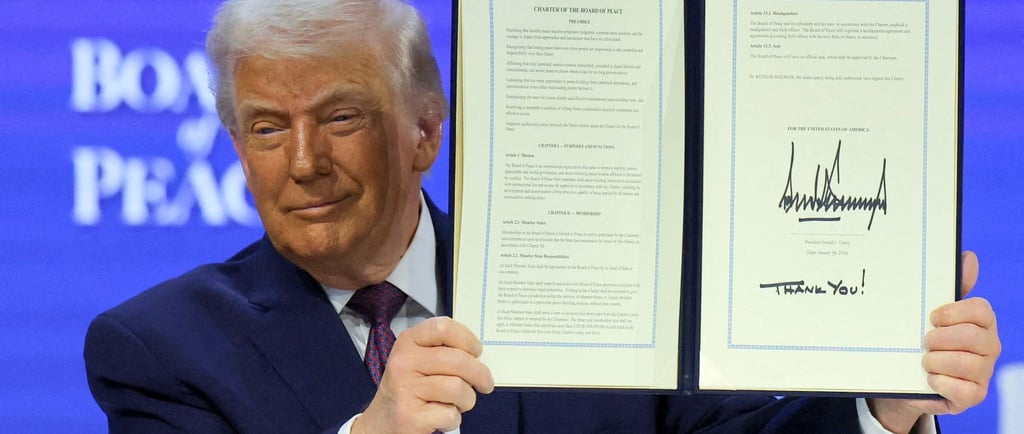
Introduction to the 'Board of Peace'
In January 2023, during the World Economic Forum held in Davos, former President Donald Trump unveiled his ambitious new initiative known as the 'Board of Peace.' This initiative is positioned as a response to the ongoing conflicts in regions like Gaza, where reconstruction efforts have faced significant hurdles. The 'Board of Peace' aims to assume roles traditionally reserved for the United Nations, offering a fresh perspective on international diplomacy and conflict resolution.
As the appointed chairman of this board, Trump intends to spearhead discussions and actions designed to foster peace and stability in conflict-affected areas. The launch of the 'Board of Peace' represents not only a strategic pivot in Trump's approach to international relations but also a marked challenge to the conventional systems established by the UN. The board's formation indicates a shift toward a more personalized and direct approach to diplomacy, where Trump's influence can potentially reshape consensus-building efforts.
The significance of Trump's initiative cannot be understated. By establishing the 'Board of Peace,' he is positioning himself as a key player in addressing international crises, particularly in the Middle East. This move seeks to capitalize on the perceived inefficiencies of existing international organizations while offering an alternative framework that may resonate with countries dissatisfied with the status quo. The 'Board of Peace' aims to create pathways for constructive dialogue and meaningful partnerships, especially focusing on the reconstruction needs of war-torn regions.
This initiative raises important questions about the future of international diplomacy and the role of alternative governing bodies in global affairs. As this new board begins its operations, its effectiveness and impact on the entrenched issues of peace and security will be closely monitored by experts and global leaders alike.
Leadership Composition and International Reactions
The recently announced 'Board of Peace' at the Davos summit has generated significant discourse regarding its leadership composition and the international reactions it has evoked. One of the most notable figures associated with this board is Argentine President Javier Milei, known for his unconventional political decisions and economic reforms. His alignment with former President Donald Trump raises questions about the ideological cohesion of the board and its potential effectiveness in addressing global issues.
Leadership within the 'Board of Peace' appears to be characterized by a mixture of right-leaning populist leaders from various countries, aligning them with Trump's vision for a new global order. This selection could be seen as an attempt to form a counterbalance to existing international governance structures such as the United Nations. However, this unconventional leadership has incited skepticism. Major international players such as the United Kingdom and France have been notably absent from endorsements of the board, suggesting a lack of legitimacy and support within the traditional diplomatic landscape.
The backlash from established powers does not simply reflect apprehension about the board's objectives, but also underscores concerns regarding the sustainability of its initiatives. In international relations, legitimacy is often intertwined with widespread recognition among key global players. While the 'Board of Peace' aims to position itself as a viable alternative to the UN, its reliance on a leadership roster that lacks backing from influential nations may hinder its effectiveness. Furthermore, the polarized nature of its composition may challenge collaborative efforts required to navigate complex global challenges.
Overall, the implications of this leadership configuration extend beyond the board's operational capacity; they also reveal the broader geopolitical landscape and the delicate balance of power as nations grapple with emerging strategies to foster peace and security.
Controversies Surrounding the Initiative
The launch of Trump's 'Board of Peace' initiative at Davos has sparked a myriad of controversies, particularly regarding its perceived intention to bypass the United Nations Security Council (UNSC). Critics argue that this move represents an alarming trend towards the privatization of global diplomacy, effectively sidelining established international mechanisms designed to maintain peace and stability. The initiative's critics contend that by promoting a private entity focused on peace-making, the Trump administration is undermining the legitimacy and authority of the United Nations, an institution that has historically played a pivotal role in conflict resolution and global governance.
Further fueling the debate, detractors highlight that the 'Board of Peace' could foster a system of diplomacy that prioritizes the interests of wealthy nations or private donors over the principles of multilateralism that the UN embodies. This raises questions about who will hold power within such a board and how decisions will be made. In addition, there are concerns surrounding transparency and accountability, as the public may remain unaware of the board's operations and its potential influence on global affairs.
Moreover, the initiative has drawn criticism for potentially diluting the efforts of established international institutions that are already in place. The UNSC, for example, is built on a framework of collective action, where member states are expected to cooperate in addressing conflicts and crises. By establishing an alternative mechanism, Trump may inadvertently promote a fragmented approach to global issues, which could hinder collective efforts to address pressing challenges such as armed conflict, refugee crises, and climate change.
As the discussion continues to evolve, the implications of Trump's 'Board of Peace' initiative raise pertinent questions about the future of international relations and the roles of established bodies like the United Nations. These debates are essential to ensure that any move towards alternative diplomatic structures does not compromise the established norms and processes that underpin global peace efforts.
Trump's Vision for Global Safety and the Future of Diplomacy
In recent years, former President Donald Trump has placed considerable emphasis on his vision for a safer world, particularly through the establishment of initiatives such as the so-called "Board of Peace" launched at Davos. Trump's rhetoric suggests a belief that this board can foster a more secure global environment, which raises significant questions about its implications for international diplomacy. During his tenure, Trump often expressed skepticism towards established entities like the United Nations, advocating for alternatives that he argues can be more effective in addressing global challenges.
The notion of peace through a board led by national leaders and key global players presents a departure from traditional diplomatic channels. Critics and supporters alike may ponder whether this shift signifies a radical rethinking of international relations. With the Board of Peace positioned as a complementary mechanism to existing structures, its potential to influence future diplomatic efforts could be profound. However, one must consider the long-term sustainability of such an approach. Can this board realistically negotiate and implement solutions to pressing global concerns, or is it a transient response to current geopolitical dynamics?
Moreover, the implications extend beyond mere operational effectiveness. Trump's assertion that the world is 'safer' can be interpreted through multiple lenses, as one explores the broader ramifications for global alliances, security dynamics, and international norms. The question lingers: does the promotion of this new diplomatic avenue signify a retreat from multilateralism or a pragmatic adaptation to contemporary global challenges? As nations navigate this evolving landscape, the future of diplomacy may be shaped not only by the actions taken by the Board of Peace but also by the existing frameworks that have long governed international relations.